BASE 3:

YOUR MOUNT EVEREST STORY
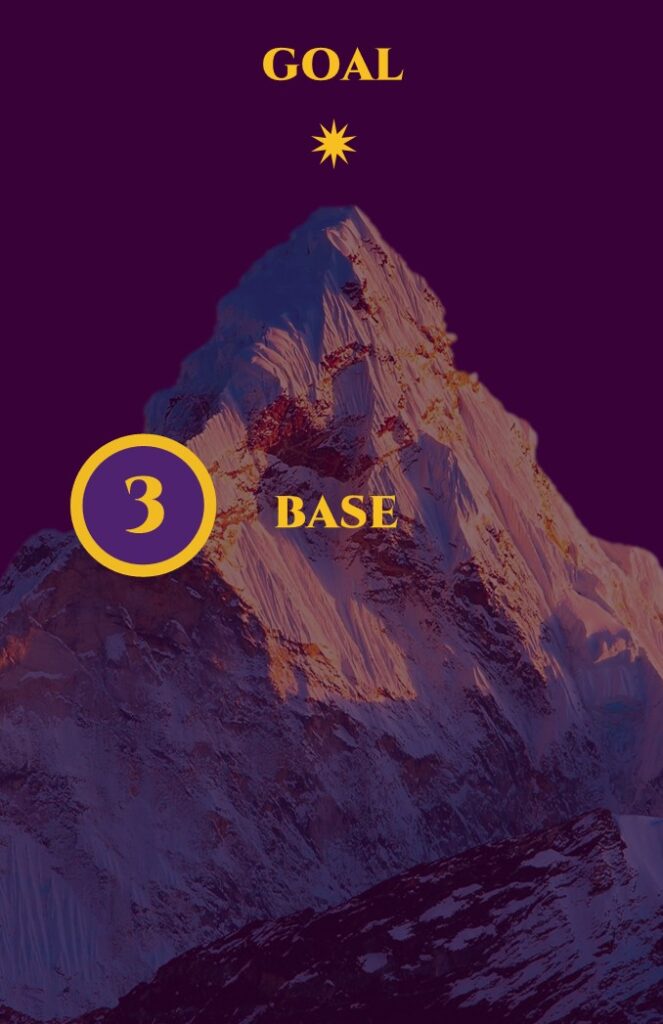
Your story as a climber was paused at Base 2, at 7,136 metres above sea level. Let’s continue it now.

You were ready to start your journey to Base 3. Remember? You had no altitude sickness. This was the result of a long acclimatization process.

After three hours ascending, you heard the “roar of the Lion,” a deep, constant noise from high-speed winds passing over the summit.

After four more hours, you arrived at Base 3 early in the morning. You were tired and had a moderate headache. Suddenly, fog rolled in and a snowstorm broke out. You stayed inside your tent, melting ice to drink water.

The next day was sunny. You woke feeling good after sleeping well. By radio, news of a tragedy arrived: many climbers had died during the storm, frozen between Base 3 and the summit. The news shocked the group.

After lunch, you felt a mild headache, but it was nothing to worry about. During the sunny day, you rested in your tent, sleeping and relaxing.

149

At midnight, the sky was clear, full of stars, and there was no wind. The weather forecast was perfect. Your headache was gone. You felt strong and ready to climb. Your journey to the summit began at midnight, ignoring the grim news.

Let’s pause your story here at Base 3. You will reach the summit later.

You may have felt frustration trying to understand the connection between metaphysics, epistemology, and ethics. The hidden gem is objective epistemology. Most likely, you still do not fully grasp it.

Another difficult concept is “value” and why it derives from the concept of “life.” Understanding this is essential to see why the morality of reason is necessary for social progress and to avoid dying in a nuclear Armageddon.

What was said about politics and art is just a roadmap, a guide to help you make your own research.

Follow the previous advice to acclimatize your mind. Create your own routines, like playing the game. If you establish new study habits gradually, with patience and repetition, you will realize the benefits in all aspects of your life, especially enjoying real self-esteem.

What follows in the book is Part 3, called Refreeze. It is the higher arrow in the Mount Everest Allegory. It represents what you need to do to put into practice what you are learning. It is attached to your Champion Constitution.

150

What follows is a simple guide. It is designed for you to complete it as you wish.

Altitude-mental-sickness symptoms will get worse when you start putting your new knowledge into practice to reach your real-life goals. Again, gradual acclimatization and permanent study are required.

“The roots of education are bitter, but the fruit is sweet,” Aristotle said. You need to be adult and serious. You need discipline and perseverance — the bitter roots — to gain wisdom and new skills. They are tools that allow you to take new opportunities in a challenging world. They allow personal growth, not only money or social status, but real self-esteem. Aristotle called it eudaimonia.

151

Champion’s Renaissance by Charles Kocian. Copyright 2024. All rights reserved.

Translate »